Non-Standard Construction at Auction: Mortgage and Resale Risk
Why Non-Standard Construction Ends Up at Auction
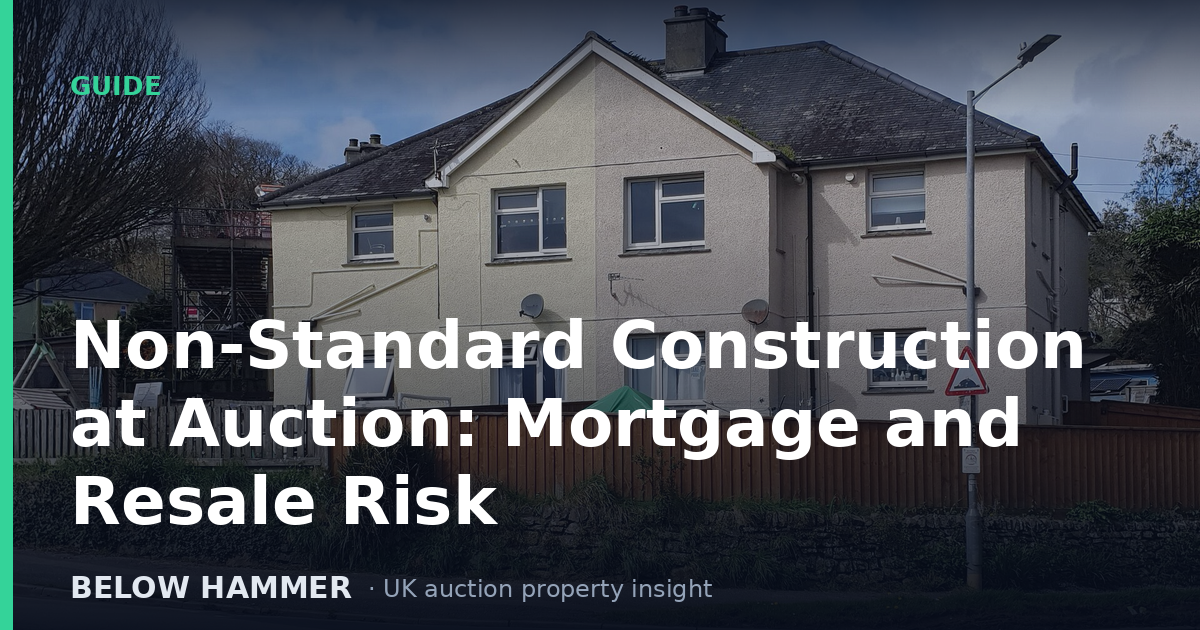
A large share of the cheapest three-bed houses in any auction catalogue aren't cheap because of subsidence or a bad legal pack — they're cheap because they're built from something other than brick and block with a timber or concrete pitched roof. Post-war Britain built hundreds of thousands of homes from precast reinforced concrete (PRC), steel frame, or timber frame systems to solve materials shortages. Many are perfectly liveable. Almost none are mortgageable in the state they're in, which is exactly why they land at auction rather than on the open market via an estate agent chain.
If you're scanning the deals list and see a guide price that looks too good against the postcode's average, non-standard construction is one of the first things to rule in or out — before you spend money on a survey.
The Construction Types That Trip Up Buyers
- PRC houses — Airey, Cornish Unit, Wates, Orlit, Reema, Woolaway. Built 1945–1965, concrete panels or columns that corrode and crack over time. Most were designated "defective" under the Housing Act 1985.
- BISF steel-framed houses — steel frame with rendered cladding, common in ex-council stock across the Sheffield (S) and North East (NE) areas. Mortgageable if the steel hasn't corroded, but many lenders still decline.
- Wimpey No-Fines — concrete cast in situ without fine aggregate. Some variants are now standard-mortgageable after repair schemes; others aren't.
- Large-panel system (LPS) flats — concrete panel blocks, post-Ronan Point (1968) fire and structural regulations apply.
- Timber-framed houses — perfectly standard today, but pre-1980s timber frame with no cavity barrier or damp-proofing can still spook lenders and surveyors.
The legal pack rarely states the construction type outright. Look for clues: the EPC certificate (often lists wall construction), the council's own stock disposal records if it's an ex-local-authority sale, or simply the building's age and appearance in the photos. When in doubt, ask the auctioneer directly before bidding — most will tell you if they know.
Why Mortgageability Matters Even If You're Cash
You might be buying with cash or bridging finance and planning to refinance later — see our guide on auction finance for how bridge-to-term works. The problem is that non-standard construction restricts your refinance options and, more importantly, restricts your buyer pool on exit. A house that only 20% of lenders will touch sells to a smaller pool of buyers, at a discount, more slowly. That discount is the real cost — not the purchase price.
As a rule of thumb from resale data across non-standard PRC stock:
- Standard construction, same street: sells at or near local average, mortgageable by most high street lenders.
- Repaired/certified PRC (e.g. under a recognised repair scheme like TRADA or PRC Homes Ltd): 5–10% discount to standard construction, mortgageable by a shrinking specialist panel.
- Unrepaired PRC or unrecognised system: 20–35% discount, cash or bridging buyers only, no conventional BTL mortgage.
Worked Example
A three-bed BISF steel-framed semi in the Newcastle (NE) area comes up with a guide price of £58,000. Standard-construction three-beds on the same estate are selling for £95,000–£100,000 through agents.
- Purchase at auction: £62,000 (hammer)
- Buyer's premium + auction fees: £2,400 (see our auction fees breakdown for what's typically charged)
- Structural survey (steel-frame specialist, essential — a standard RICS Level 2 won't cut it): £650
- Steel repair/certification works (if corrosion found): £8,000–£15,000
- Total in, worst case: £88,050
Even after certification, expect resale at £85,000–£90,000 rather than the £95,000–£100,000 standard-construction comparable — because your buyer is either cash or one of the handful of lenders (typically building societies, not the big five banks) who'll lend against certified BISF stock. Run the numbers both ways: if you can only exit to a cash buyer, model that price, not the agent's asking-price comparable.
Checklist Before You Bid
- Identify the construction type from the EPC, photos, or by asking the auctioneer.
- Search "[system name] mortgage lenders" or ask a broker who specialises in non-standard construction — availability changes yearly as panels shrink or expand.
- Get a survey from someone who has specifically inspected that construction type before, not a generalist.
- Price in repair/certification costs as a line item, not a contingency.
- Model your exit at the non-standard resale discount, not the street's standard-construction average.
Non-standard construction isn't a reason to avoid a lot outright — it's often where the real below-market pricing lives, particularly on ex-council estates. But the discount at auction has to be bigger than the discount you'll take on the way out, or the deal isn't actually a deal.